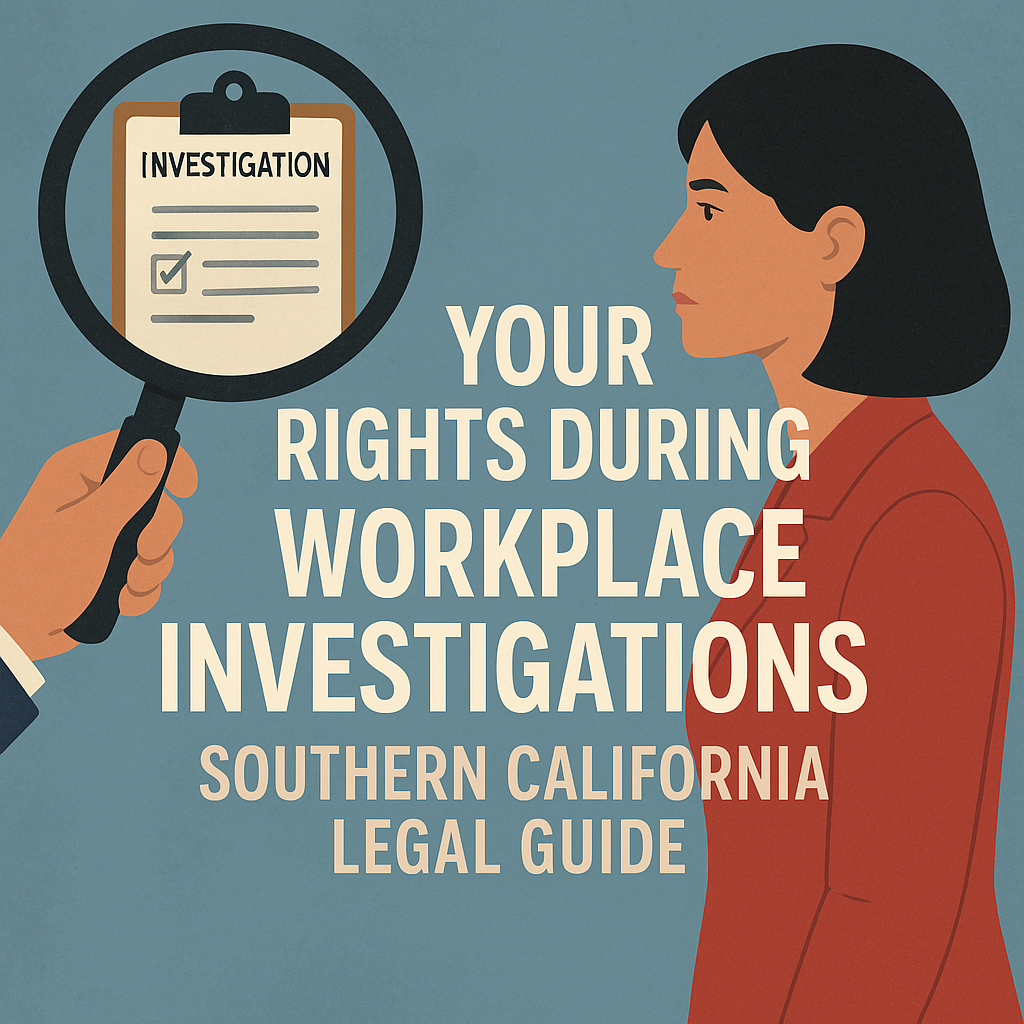
Your Rights During Workplace Investigations: Southern California Legal Guide
Workplace investigations can be stressful and confusing for employees. Whether you are the subject of an investigation or a witness, knowing your rights is essential to protect yourself and ensure a fair process. This article provides a Southern California legal perspective on your rights during workplace investigations, helping you navigate these situations with confidence.
What Is a Workplace Investigation?
A workplace investigation is a process conducted by employers to look into allegations of misconduct, violations of company policies, harassment, discrimination, or other workplace issues. These investigations aim to uncover facts, determine if policies were violated, and decide on appropriate action.
In Southern California, workplace investigations must comply with both federal laws and state-specific regulations to protect employee rights and maintain legal fairness.
Your Rights During a Workplace Investigation
1. Right to Be Informed
You have the right to know that an investigation is taking place if you are directly involved. Employers should notify you of the issue being investigated and your role in the process. This transparency allows you to prepare and respond appropriately.
2. Right to Representation
While California law does not universally guarantee the right to have an attorney or union representative present during interviews in internal investigations, employees covered by a collective bargaining agreement may have this right. Outside of union settings, employers might allow a coworker or other representative to accompany you, but this is at their discretion.
3. Right to Privacy and Confidentiality
Employers have a duty to keep the investigation as confidential as possible to protect all parties involved. However, confidentiality is not absolute. Information disclosed may be shared with those who need to know to conduct the investigation or take remedial action. Southern California employers must balance confidentiality with transparency and legal obligations.
4. Right Against Retaliation
California law, including the Fair Employment and Housing Act (FEHA), protects employees from retaliation for participating in workplace investigations. Retaliation can take many forms, such as demotion, termination, or harassment. If you believe you are being retaliated against for cooperating with an investigation, you have the right to file a complaint with the California Department of Fair Employment and Housing (DFEH) or consult an employment attorney.
5. Right to Provide Your Side of the Story
You have the opportunity to respond to allegations and tell your side during the investigation. It’s essential to be honest and thorough when sharing your perspective. Employers should consider your explanations as part of the fact-finding process.
What Employers Must Do During Investigations in Southern California
Employers have legal obligations during workplace investigations, including:
- Conducting a Prompt and Thorough Investigation: Employers must investigate complaints diligently to prevent ongoing harm or legal liability.
- Ensuring Impartiality: Investigations should be unbiased, with investigators who do not have conflicts of interest.
- Maintaining Confidentiality: Protecting the privacy of all involved to the extent possible.
- Taking Appropriate Action: If wrongdoing is found, employers must take corrective measures, which may include disciplinary action or policy changes.
Tips for Employees During a Workplace Investigation
Navigating a workplace investigation can be challenging. Here are some practical tips for employees in Southern California:
- Request Written Notice: Ask for documentation about the investigation’s scope and your rights.
- Be Honest and Concise: Answer questions truthfully and to the point to maintain credibility.
- Keep Records: Document interactions related to the investigation, such as emails or meeting notes.
- Seek Legal Advice: If you feel overwhelmed or unsure of your rights, consult an employment lawyer experienced in California law.
- Avoid Retaliation or Gossip: Stay professional and avoid discussing the investigation with coworkers to prevent misunderstandings.
When to Contact a Southern California Employment Attorney
If you believe your rights have been violated during a workplace investigation—such as facing retaliation, discrimination, or an unfair process—it’s critical to seek legal counsel. An experienced Southern California employment attorney can:
- Review your case and explain your rights
- Help you gather evidence supporting your position
- Represent you in negotiations, mediation, or litigation
- Guide you through administrative complaints with agencies like the DFEH or EEOC
Conclusion
Understanding your rights during workplace investigations is vital to protect yourself and ensure justice in Southern California workplaces. While the process can be intimidating, staying informed and proactive can make a significant difference. Remember your rights to information, privacy, non-retaliation, and fair treatment. When in doubt, consult with a qualified employment attorney to safeguard your interests.
By knowing your rights and the legal context in Southern California, you can navigate workplace investigations with greater confidence and clarity.